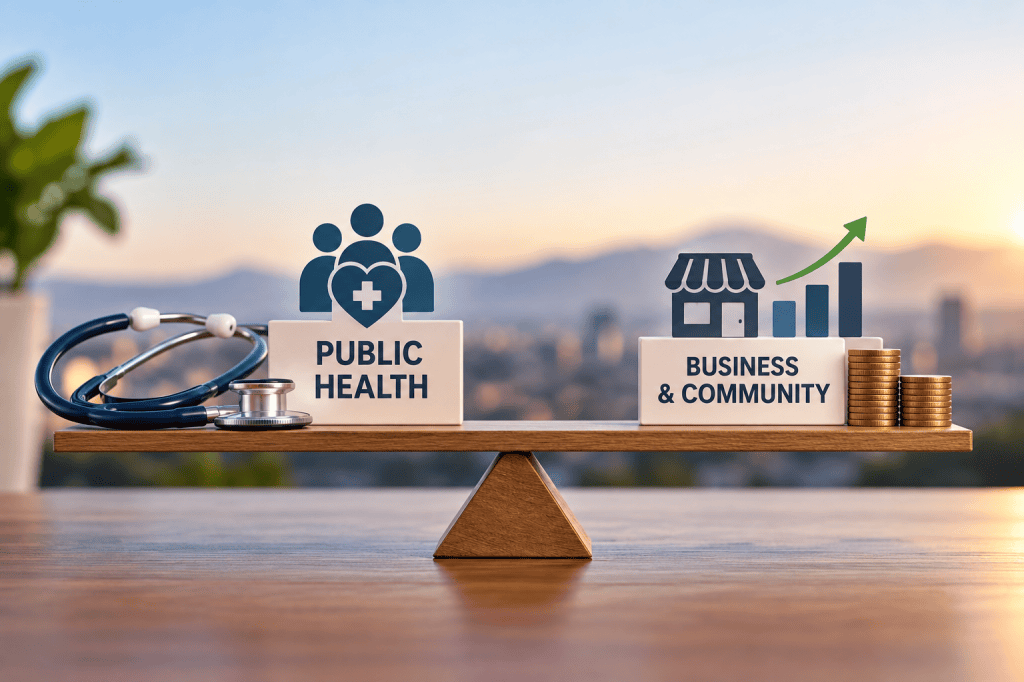
When we think about healthcare, we usually think about hospitals, doctors, and treating patients. But many things that affect our health happen outside hospitals. Decisions made by businesses and governments can affect what we eat, how we live, and the choices we make every day. Public health policies often try to prevent health problems before they happen. But sometimes, what seems like a good decision for public health may look different from a business perspective.
In my health policy class, we recently held a town hall simulation where students played different roles and discussed proposed public health policies. Each group presented its position and tried to convince the decision makers using research, personal stories, and other arguments. This exercise showed me how differently people viewed the same proposal. While one group focused on improving health, another was concerned about how the policy might affect businesses, jobs, or people’s daily lives. Even with good evidence supporting a policy, people may have different reasons for supporting or opposing it.
One challenge is that health benefits and financial costs don’t always happen at the same time. A policy might help prevent health problems years from now, but businesses and people could feel its financial effects today. For someone trying to keep a business open or provide for their family, that is a serious concern. Businesses also create jobs and support communities, so their concerns shouldn’t be ignored. At the same time, we can’t overlook the long-term costs of preventable health problems. As the World Health Organization explains, our health is also affected by where we live, work, and the resources available to us.
This also made me think about the role of healthcare professionals. We sometimes think of policies as something for government officials or politicians to deal with. But many of these decisions affect the health problems we see in hospitals and clinics. Medical knowledge is important, but we also need to look at the bigger picture and understand how our decisions affect others. This means negotiating trade-offs, understanding competing interests, and finding creative solutions that serve multiple stakeholders. These skills are also important when running a healthcare business. We need to be part of these discussions, listen to other groups, and help decision makers find solutions that work. A World Health Organization handbook on public participation also explains why involving different groups can help governments develop health policies that better meet people’s needs.
Improving public health requires more than having good research or good ideas. We also need to understand how a decision affects businesses, families, and the community. That doesn’t mean we should dismiss health risks because a policy might affect someone’s business. But we need to listen, understand different concerns, and find ways to protect health while considering the wider effects. For me, this is another example of why healthcare, business, and leadership need to work together, and why healthcare professionals should have a voice in these discussions.
When a decision could improve public health but also affect businesses or people’s livelihoods, what do you think should matter most in making that decision? Let me know in the comments.


Leave a Reply