
Credit: Photo by Kaboompics on Pexels.
My understanding of health insurance in the past was fairly simple. You pay for insurance, and your essential healthcare costs are covered according to your plan. But the U.S. system introduced me to terms like premiums, deductibles, copays, coinsurance, and out-of-pocket maximums, which I was not familiar with. I wondered why someone who pays for insurance every month would still receive a large bill after treatment. I gradually realized that having insurance and being able to afford care aren’t always the same thing.
The basic idea behind health insurance is risk sharing. People contribute to a common pool so that those needing expensive care don’t carry the entire cost themselves. In the U.S., many plans also require patients to share costs. A premium is what you pay to maintain coverage. A deductible is what you pay for certain covered services before insurance starts sharing those costs. A copay is a fixed payment for a service, while coinsurance is a percentage of the covered cost, such as 20%. The out-of-pocket maximum limits what you pay for covered, in-network services during a plan year. Interestingly, premiums don’t count toward that limit. HealthCare.gov explains these terms further.
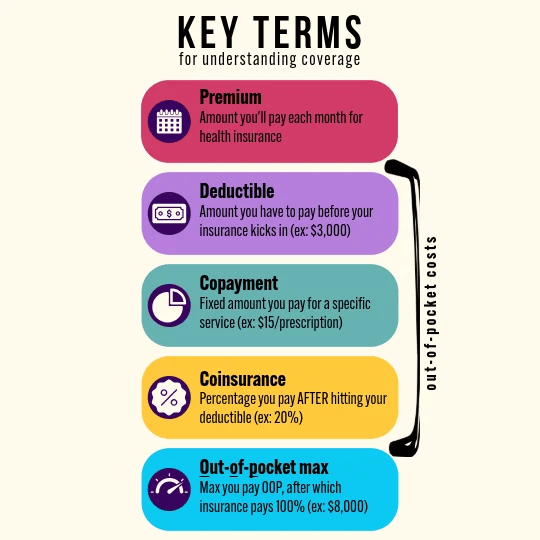
Imagine paying premiums every month and then discovering you still owe thousands of dollars for treatment. Depending on the plan, you might not have met your deductible or may owe part of the bill. Some can manage that expense, while others might delay tests, skip medication, or postpone care. A 2024 Commonwealth Fund survey found that 23% of working-age U.S. adults were underinsured, meaning their coverage still left them facing high healthcare costs. Among them, 57% reported avoiding needed care because of cost.
From a business perspective, insurance is about managing financial risk while keeping coverage affordable and sustainable. Insurers collect premiums, pay claims, estimate future costs, and decide how expenses are shared with patients. Deductibles and other cost-sharing methods help control spending and can discourage unnecessary use. But they may also discourage necessary care. A plan with lower monthly premiums might have a higher deductible, leaving patients responsible for more costs when they need treatment. A plan that looks affordable when someone is healthy might become expensive when they’re sick. Insurers and patients are both managing financial risk, but from different perspectives.
For me, this revolves around affordability. Insurance reduces financial risk, but protection depends on what it covers and what patients still pay. Having practiced medicine in the past, one measure I’d pay attention to is whether people delay necessary treatment because of cost. Early care can sometimes prevent serious complications, while delays may create additional problems for patients and the healthcare system. It’s not the only measure of financial protection, but it’s an important one.
If someone has insurance but still hesitates to seek needed care because of cost, how much financial protection are they really getting? I’d love to hear your thoughts in the comments.


Leave a Reply